EOS is preparing to unveil a new polymer 3D printing platform at Formnext 2026, with full details scheduled for November 17. Before the launch, some EOS customers have already tested the system. Materialise, an additive manufacturing service provider, evaluated the machine under real production conditions and reported 44% higher productivity than with the previous EOS platform, along with a reduction of more than six minutes in build time per part.
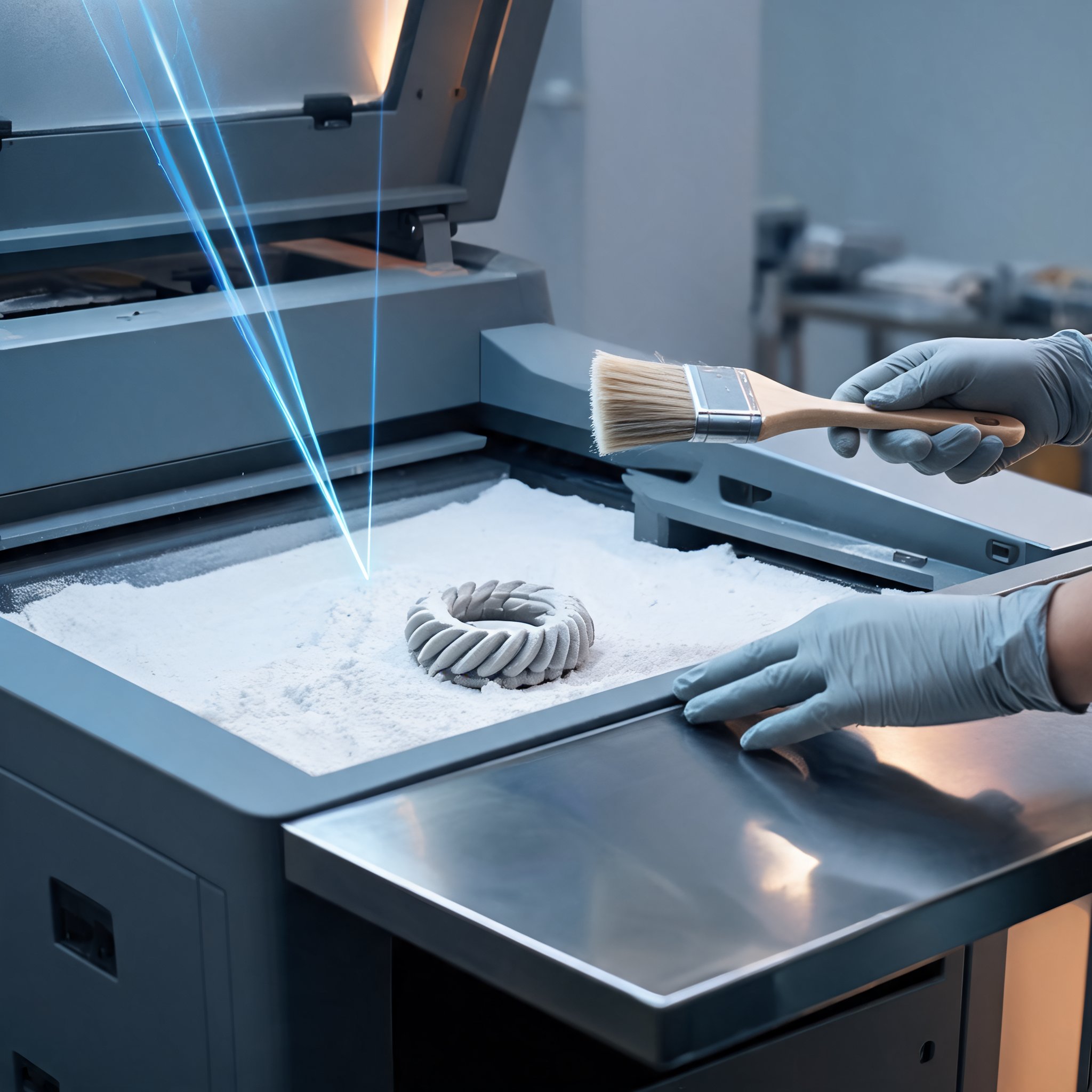
As part of the evaluation, Materialise used the soon-to-launch EOS printer to produce a cable twist wheel for GKN Aerospace. The company was not only checking whether the machine could print the part, which it did, but also assessing reliability, the impact of new features, productivity and efficiency, usability and control, and how easy the prints were to post-process.
Three-laser architecture and process control
EOS has not yet released all technical details, but the platform has a three-laser architecture, intelligent utilization and dynamic load balancing. The system is designed to maximize output per build by equally balancing the exposure workload through dynamic load balancing, while increased laser capacity is linked to greater productivity.
Giovanni Vleminckx, process engineering manager at Materialise, said the three lasers make a visible difference in performance. Their intelligent utilization helps the company achieve considerably higher throughput while maintaining the part quality customers expect, he said.
The system also offers extended process controls. Users can work with validated parameter sets or open them up for greater control and alignment with specific applications and key performance indicators. Vleminckx said what stood out was not one isolated feature but the overall performance of the system, which combines the productivity needed with the process stability and control required to bring demanding applications into production.
Build time and downstream handling
When printing the cable twist wheel, Materialise recorded productivity gains of 44% compared with the previous machine. Build time per part fell from 19:53 to 13:51 minutes. The AM service provider also noted downstream benefits from an advanced roller recoater that creates softer powder cakes. This makes it easier to depowder parts and reduces handling effort.
Vleminckx described the soft powder cake as a very tangible improvement for operators. Parts are easier to unpack and depowder, making the overall workflow noticeably more efficient, he said.
The improvements from the three-laser architecture, new roller recoater and open process controls are significant for a manufacturing service such as Materialise, which has high-throughput requirements and needs to adapt to different production applications. EOS plans to show the new polymer AM platform in person from November 17 at Formnext 2026 at its booth in hall 12, booth D71.